

Technologies used in VLT Laser projectors
Laser sources and graphics projection systems. Laser system automation, internet control, temperature stabilization, software and laser controllers.
VLT Laser manufactures projectors and many of their components in-house. This supports control over equipment design, manufacturing quality and reliability, and allows us to develop integrated technical solutions.
Laser projector sources
The laser source is central to projector performance. This article describes configurations using red at 632–635 nm, blue at 450 nm and green at 532 nm. The described higher-range green sources use DPSS technology at 532 nm, with a stated 99% spot parameter, five-year source warranty and 15,000-hour service life; budget configurations use 520 nm laser diodes. Our in-house sources are designed for low divergence, quoted here as 0.9–1.3 mrad. The original comparison describes brightness gains of 60–80%; actual performance depends on the model, optics and test conditions.
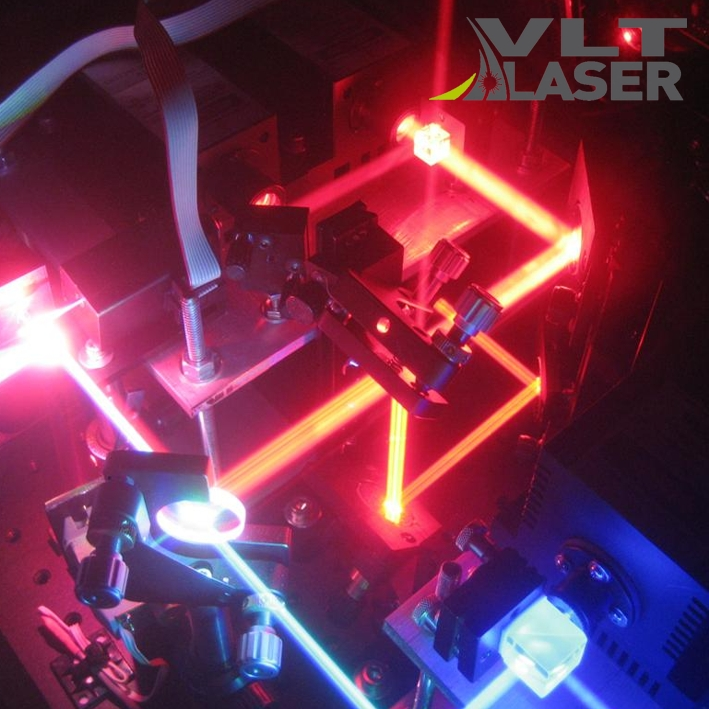
Our sources use multi-element optics, optical and mechanical beam correction, and adjustment of both individual sources and color-combining mirrors. Features include vibration resistance, temperature stabilization, microcomputer-controlled active/passive TEC cooling, optical anti-fogging and fault protection. These systems are designed for long-distance, large-area operation and extended source life, described in this article as exceeding six years. The color configurations described support 256 primary colors and 16.8 million additional shades.
The source article describes our design emphasis as high perceived brightness per milliwatt, quoting a 96% figure for its comparison. Sources use digital/analog control rather than simple TTL switching, with output balanced among colors. In the RGB configurations discussed here, red at 635 nm contributes approximately 2,500–4,000 mW. Red wavelength, optical quality and source balance affect visibility and color reproduction; output ratings alone do not show how a projector will perform at a particular distance.

Why not simply allocate 1,000 mW to each red, green and blue source? Perceived brightness varies strongly with wavelength, so equal optical power does not produce equal visual brightness or a balanced white. The source article illustrates this with approximate visual-response figures of 80–90% for green, 30–40% for blue and 20–30% for red, and proposes a blue-to-green power ratio around 2.5 for the wavelengths discussed. These are the author's design comparisons, not universal calibration constants. Source wavelengths, color balance and optical performance must be evaluated together for the selected projector.
Projector galvanometer scanners
Galvanometer scanners steer a laser point to draw vector graphics, text and animation. Their performance determines drawing complexity, geometry and refresh rate. Insufficient scan performance can cause visible flicker or make text difficult to read.
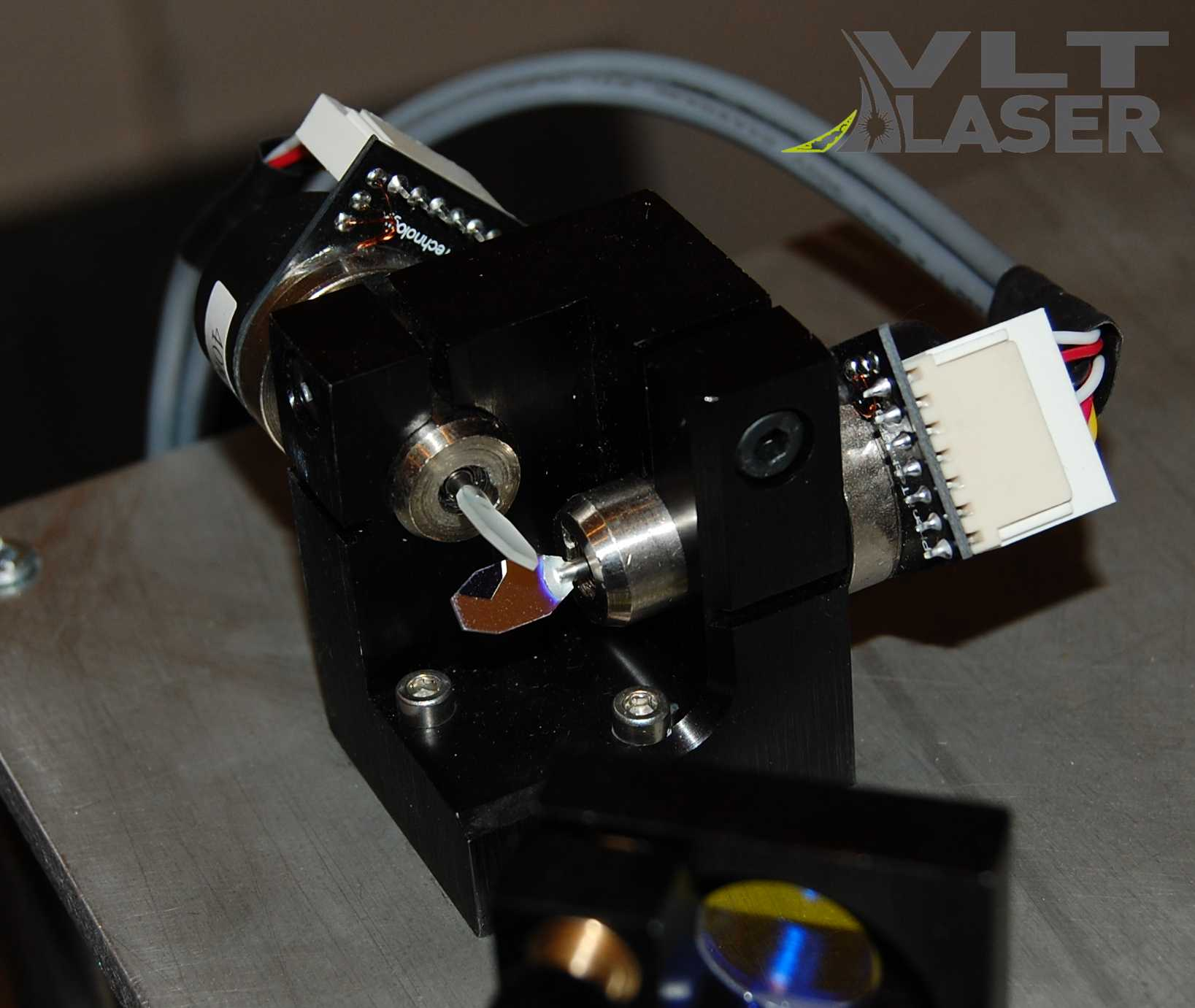
The scanners described here were developed for us by GTs Systems, Japan, version 6.4. Their stated performance reaches 60 kpps, or 60,000 points per second, with complex frames refreshed at up to 30 FPS under suitable conditions. The design includes enhanced feedback, positioning and power supply arrangements. Image size, position and geometry can be adjusted electronically, including remotely, with the article describing a 0–60° scan range on each axis. Scanner quality is especially important for outdoor advertising, where large, stable graphics are required.
Control and software
VLT Laser supplies integrated projector packages that include a controller and software for preparing graphics and shows. The package is selected for the scanner system and laser optics, avoiding the need to assemble an incompatible combination. The systems described here use Moncha.Net or Pangolin FB-4 hardware and software for creating your own laser graphics.
A library of ready-made graphics and frames is included. The software is intended to be approachable, with reference information to help users learn to create content. We can also arrange graphics production to a written brief. A 3D Max Studio converter and relevant plugins are available on request for advanced users. Although the projector is technically complex, its operating workflow is designed to be straightforward.
When comparing packages, check whether the advertised price includes the controller, graphics creation software, training, weather protection, automation and remote control. Some packages require these to be purchased separately or are limited to ready-made templates. The source article discusses IShow and MediaLas Mamba as examples encountered in its comparisons; software capability should be judged using your intended graphics and text, not a product name alone.
Our packages include an automated 3D graphics workflow based on Moncha.Net or Pangolin FB-4 hardware and software for creating advertising animations and laser show graphics. Confirm the controller and software configuration included with the selected projector.
Moncha Net and Pangolin FB-4 controller features
The configurations described include internet/LAN/Wi-Fi control, ILDA and DMX, including DMX output for compatible lighting, fog machines or other equipment. They offer rewritable memory with SD cards up to 32 GB, button control and an LCD. The article specifies 12-bit digital-to-analog conversion per channel. Functions include standalone playback without a PC, manual selection and live streaming from a computer over the internet. Image size, position, geometry, output, brightness, graphics speed, color balance and monochrome mode can be adjusted electronically, with projector test modes and other functions. Exact features depend on the controller version.
The videos demonstrate selected controller functions
Additional services
The equipment described combines high optical brightness, complex graphics at usable refresh rates and automated operation without a continuously connected computer. Features include cold-start and overheating interlocks, adjustable cooling, independent source temperature control, optical dust protection, timed playback and microprocessor-controlled heating and cooling. The package includes graphics creation software, standalone memory, internet/Wi-Fi control and graphics streaming. Digital image size, geometry and brightness adjustments, maximum-output modes and monochrome operation provide flexibility for different projection areas and distances.
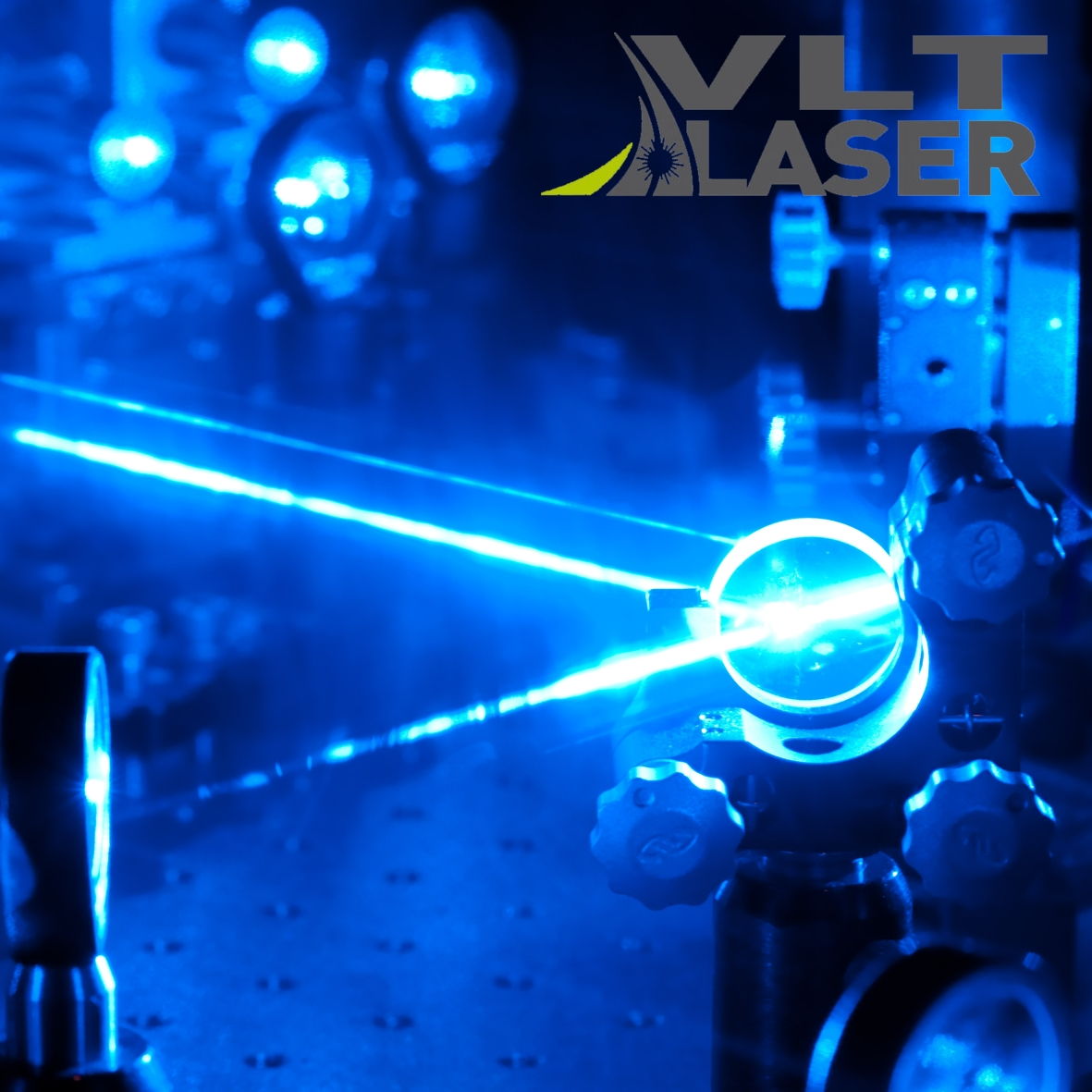
Other features described include selected source wavelengths, operation from suitable vehicle power supplies, voltage stabilization, vibration-resistant alignment, full adjustment facilities, a compact steel housing and our own laser sources. We provide documented model-specific warranty terms, technical documentation, Russian laser safety certification materials, assistance concerning Russian advertising documentation, training and service support. Warranty and support periods should be confirmed for the selected model and package.
Automatic operation of advertising projectors
After installation, configure image size, position, geometric correction, output and color mode. The projector regulates its internal temperature, activating heating, cooling, source stabilization, monitoring and protective systems as required within its operating range. Set the start/stop schedule in memory to run advertising sequences daily or according to a weekly plan. Configure internet access if remote control is needed. The included software lets you prepare graphics, upload them to projector memory remotely and stream live graphics while retaining control. Files can be written or replaced without visiting the projector, which is useful for elevated or difficult-to-access sites. The system can then run scheduled sequences without a continuously connected PC. Remote video monitoring may also be installed. Alternative control methods include standard LAN, DMX and SD card replacement; live streaming from a PC or remote server is supported by the described configuration.
Documentation and support
Equipment is sold through our business entity with a sales agreement and equipment specification. We provide documented warranty terms, a warranty certificate, technical documentation and after-sales service. Russian documentation described in the source article refers to GOST 31581-2012, SanPiN 5804-91 and applicable Customs Union technical regulations. We also provide equipment familiarization and can assist with documentation concerning outdoor laser advertising in Russia. Requirements for a particular site and jurisdiction must be established separately.